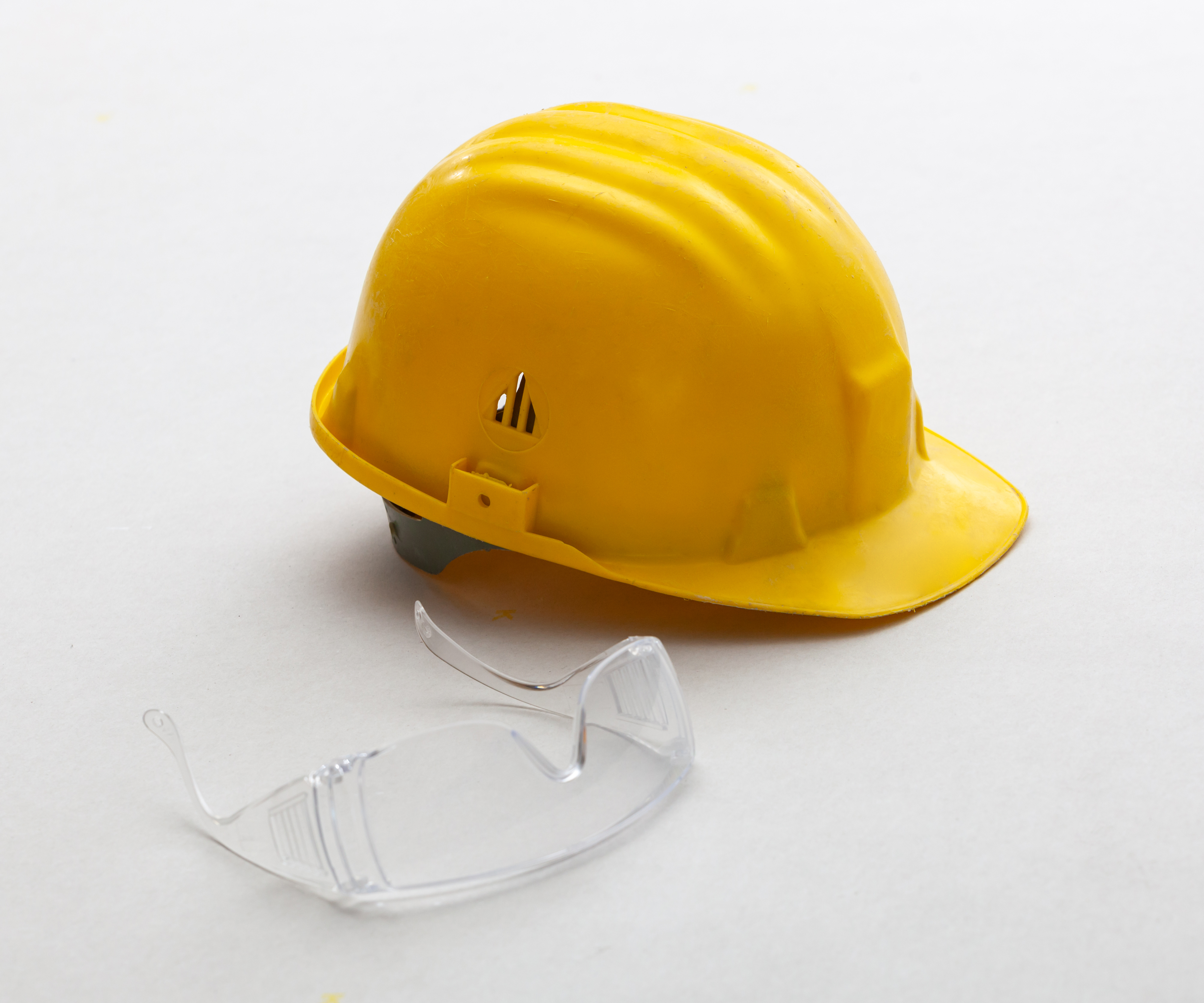

In the ready-mix industry, as well as any other industry in construction or manufacturing, we rightfully put a lot of emphasis on our employees wearing required Personal Protective Equipment (PPE) while in a Safety Sensitive role or performing a safety sensitive task.
Wearing PPE is the action that is most in the individuals control, most easy to detect when someone isn't meeting the requirements, and most easy to rectify when out of compliance. PPE is necessary for our personal safety, but it is only a part of the spectrum that controls our safety. It is a defense, but it should be looked at as a required last line of defense after all other measures to protect ourselves have been exhausted, or if one of those measures were to fail.
When evaluating a task, the components of it should be put through the lens of what is called the hierarchy of controls.
The goal is to eliminate hazards whenever possible rather than relying solely on employee behavior or personal protective equipment (PPE). For example, Face Shields are a crucial protection against chemical splashes to the face, but even more important is to create an environment where the hazardous chemical doesn't get a chance to spray someone in the face.
The Hierarchy consists of 5 management controls, starting at the most effective to last line of defense:
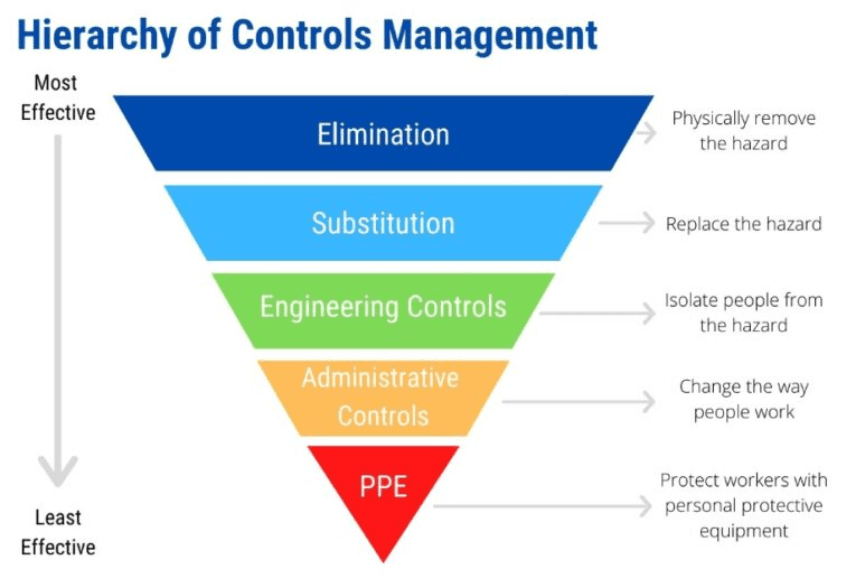
Putting the Hierarchy into Practice
There are 5 questions we can ask ourselves that tie into each control before beginning any task. Consider the order of operations for a Task Safety Analysis.
Elimination – Can we eliminate the hazard?
An example would be a component at height that needs greasing that presents a fall hazard to employee, but a grease line and fitting are installed that allows servicing while the employee is on ground. This eliminates the fall hazard. Elimination of a hazard is always the most effective control, the only con is that in many cases elimination of the hazard, if feasible, could come at great expense and time.
Substitution – Can we replace the hazard with something safer?
An example of substitution could be replacing a truck washing chemical that has less potential for adverse effects on health. While effective, a con of substitution generally comes down to the potential for introducing new hazards that would need to be contended with and controlled.
Engineering Controls – Can we engineer a way to separate our employees from the hazard?
An example of an engineering control is Machine Guarding. Guarding prevents an employee from inadvertently coming into contact with a hazard by physically preventing access. The con of engineering controls generally comes down to the ability to circumvent the control for a matter of convenience or if controls weren't put back into place after servicing.
Administrative Controls – Can we change the way the work is performed around the hazard?
An Example of an Administrative Control is a Lock out/Tagout procedure. The hazard still exists, but a procedure is put in place that allows the employee to perform the task safely if followed. The con of administrative controls generally comes down to human factors for adherence to training, policy, or procedure.
PPE- What PPE is needed to provide additional protection against the hazard?
We know PPE like the back of our hand. Hard hats, Safety Glasses, High Vis Outerwear, and Construction Worthy Footwear in any safety sensitive area. If the task dictates it, Face Shield, Gloves, Dust masks, and/or hearing protection may be needed. The con with PPE is that is protects you... to an extent. A hard hat can provide great protection from a small falling object, but the larger and heavier the object the less the hard hat will protect you from injury. A glove is great against scrapes, cuts, and burns, but it won't stand a good chance protecting you from injury if you get your hand caught in a roller.
Bottom Line
At Lauren Concrete, we preach thinking safety in the moment, which can be interpreted as an intense focus on the things that we can control the most in any given situation. The hierarchy of controls provides the framework in which we evaluate in the moment what we can do to effectively create a safe environment for ourselves and others.