
As temperatures rise, so do the challenges of placing concrete in the field. At Lauren Concrete, we know how critical it is to maintain consistency, strength, and durability—even when the Texas heat is at its peak. That’s why we’ve developed a comprehensive Hot Weather Concreting Policy based on ACI 305R guidelines, best practices, and years of boots on-the-ground experience.
Here’s how we can keep our concrete cool, controlled, and performing at its best no matter how high the mercury climbs.
What Counts As “Hot Weather”?
Hot weather concreting isn’t just about high temperatures. According to ACI 305R, it’s any combination of:
- Ambient temperatures above 90°F
- Concrete temperatures above 77°F
- Relative humidity below 50%
- Wind speeds above 10 mph
- High solar radiation
These conditions can speed up moisture evaporation, cause rapid setting, slump loss, and even increase the risk of cracking. That’s why it’s so important to prepare and plan ahead.
How Lauren Concrete Prepares for the Heat
Our team takes proactive steps throughout production, delivery, and placement to keep concrete performing as it should, even under the toughest environmental conditions.
1. Material Handling & Cooling
- We water our aggregate stockpiles to lower retained heat.
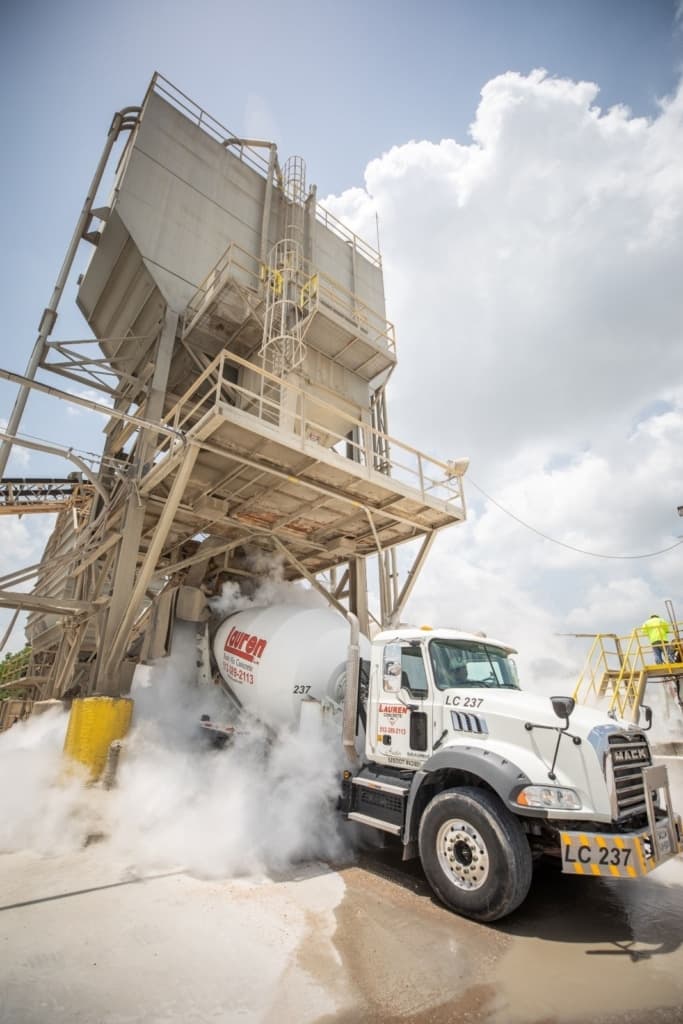
- We can use chilled water, ice, or liquid nitrogen to control mix temperature without affecting the water-cement ratio.
2. Mix Design Adjustments
- We include ASTM C494 admixtures like water reducers and retarders to improve workability and control set times.
- We incorporate supplementary cementitious materials (SCMs) like fly ash to help regulate hydration.
- As part of our Hot Weather Concreting strategy, mixes undergo an internal product validation process to reduce on-site retempering and ensure strength and durability.
3. Batching & Real-Time Adjustments
- We adjust batch water and admixture dosage daily, accounting for weather, raw material temps, and haul time.
- Chemical admixtures are used to maintain workability—not added water.
4. Smart Scheduling & Onsite Support
- We work with contractors to avoid peak temperature placements.
- We dispatch TSRs and Field Reps to sensitive pours to ensure quality oversight.
- Truck schedules are optimized to minimize delays and prevent slump loss or early stiffening.
Tips for Success in the Field
As your technical partner, we recommend the following field practices to keep your placements on track:
Before Placement
- Dampen subgrade, forms, and rebar, but avoid standing water.
- Ensure manpower, equipment, and curing materials are ready and accessible.
During Placement
- Keep concrete temps below 95°F or as project specs require.
- Do not add water on-site. Use approved admixtures if needed.
- Minimize time between truck arrival and concrete placement.
After Placement
- Begin curing immediately after finishing.
- Use water spray, curing compound, or wet burlap for at least three days.
- White pigmented curing compounds can help reflect heat and reduce surface temps.
Field-Cured Cylinders Matter, Too
Concrete cylinders tell the story of your placement quality, so it’s important to take care of them:
- Keep field-cured cylinders between 60°F–80°F.
- Use insulated, temperature-controlled boxes (not coolers).
- Label clearly with time, temperature, and mix ID for traceability.
Our Quality Control Promise
Our TSRs and TSMs document every pour under hot weather conditions including concrete and ambient temps. We also:
- Run seasonal lab trials to evaluate admixtures and materials.
- Record and review any deviations from best practices.
- Use field feedback to constantly improve our processes.
Training, Communication, and Continuous Support
Before each hot season, we roll out:
- Refresher trainings for our drivers, plant managers, and field teams.
- Technical bulletins, jobsite field guides, and temp charts to support customers.
- Ongoing communication between dispatch, QC, and your team to keep projects running smoothly.
Hot Weather, Handled Right
At Lauren Concrete, we take hot weather concreting seriously—because quality matters year-round. From mix design to placement, we bring the knowledge, tools, and support you need to get the job done right, even when the heat is on.
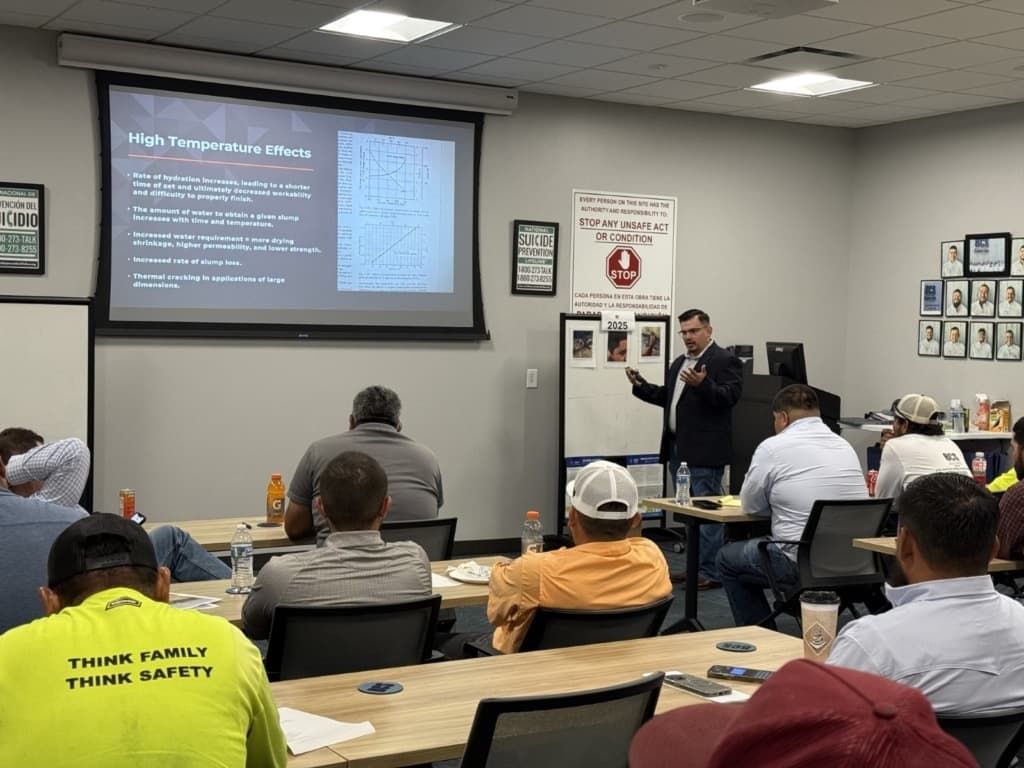
Have a hot-weather placement coming up? Reach out to your Lauren Concrete Sales Representative for guidance, and if you would like to learn more about Hot Weather Concreting, schedule a Lunch & Learn with us for you and your team!
We’re here to help ensure your concrete stands strong in every season.
Check out our downloadable Field Guide on Hot Weather Concreting